


A Fire Station Where Daylight Stays on Duty
A fire station is a workplace, a training centre, and a home for people who may be on call for 24 or 48 hours at a time. At Manassas Fire & Rescue Station #21, daylight had to improve readiness and comfort without creating glare, shadows, or another condition emergency personnel would need to manage.
Project Details
|
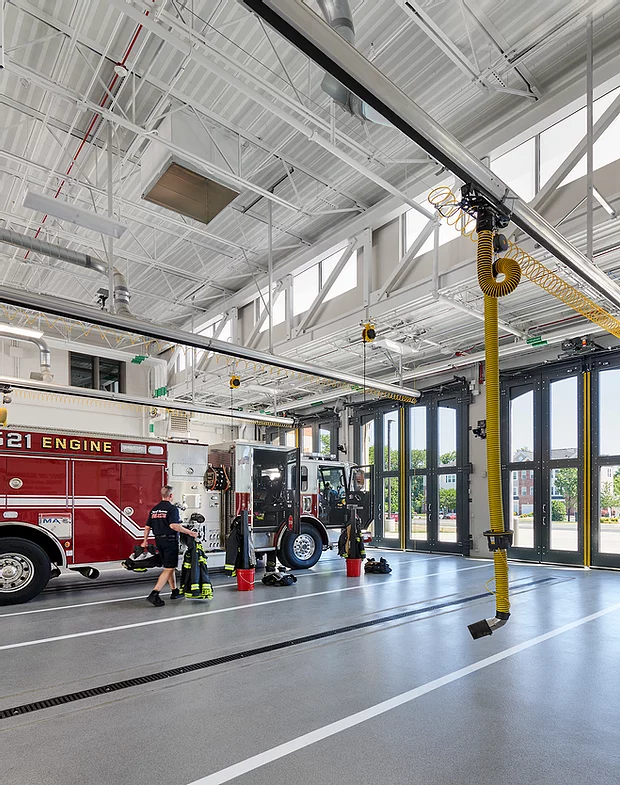 Inside the apparatus bay: a working environment where even, glare-controlled daylight supports daily readiness. |
The Challenge: A Building That Cannot Take a Day Off
For the City of Manassas, its first new in-city fire station in 51 years had to do more than house vehicles. The 21,000-square-foot, four-bay facility would support career fire and rescue personnel and a volunteer rescue squad through long shifts, training, maintenance, and rapid response.
Performance Matters in Every Zone
The apparatus bays needed even light for safe vehicle movement and equipment work, not concentrated skylight hot spots and deep shadows. Personnel also needed a building that supported alertness during the day and restorative conditions when shifts allowed. At the same time, the training and entry towers had a civic role to play: they needed to function in daylight and signal safety and readiness after dark.
The Third Option: Assign Each Glazing Type a Job
Samaha Associates did not treat the entire envelope as one glazing decision. Vision glass was placed where fire and rescue personnel needed visibility and connection to the streets around the station. Solera® was used where the building needed daylight to perform differently: deep in the apparatus bay and in the training and entry towers, where direct sun and glare would work against the task at hand.
Solera® as the Performance Layer
In the apparatus-bay clerestory, Solera® diffuses daylight before it reaches the work floor, supporting a more even environment for vehicles, equipment, and personnel. In the towers, it provides controlled daylight for daytime drills and helps create the building’s nighttime civic presence when backlit. Daylight sensors reduce the need for electric light when natural light is available.
From Continuing Education to a Built Solution
The approach began with an architectural daylighting and glare-management course from Advanced Glazings. The team applied those lessons to Station #21 with a clear goal: create a high-performance facility that respects the people who use it around the clock instead of asking them to compensate for its lighting conditions.
The completed station brings that civic direction together with a practical lighting strategy. Traditional masonry details establish the building’s character, while targeted daylighting and controls make the interior work better over the course of a 24/7 operating schedule.
The Result: A Station Designed for Readiness
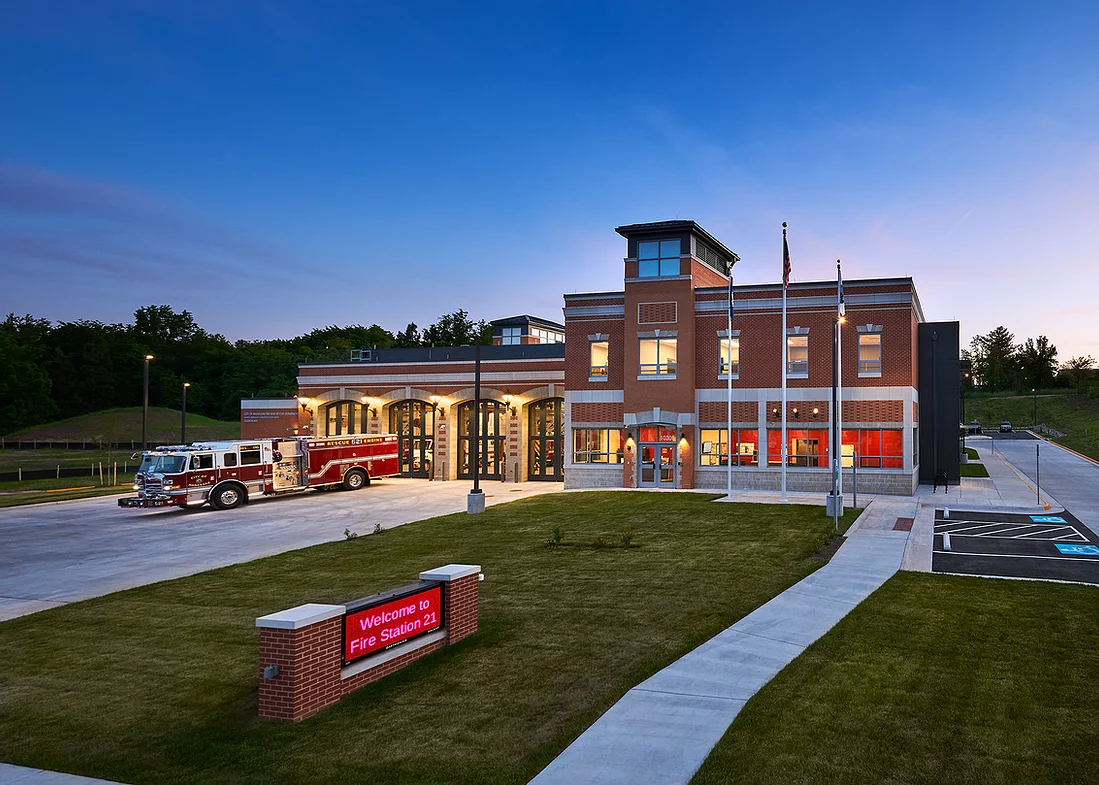
Completed in spring 2021, Manassas Fire & Rescue Station #21 delivers a more comfortable, functional environment for the emergency personnel who train, work, recover, and respond there. The daylighting strategy helps make bright areas usable—not simply brighter—while the towers contribute a visible marker of public safety after dark.
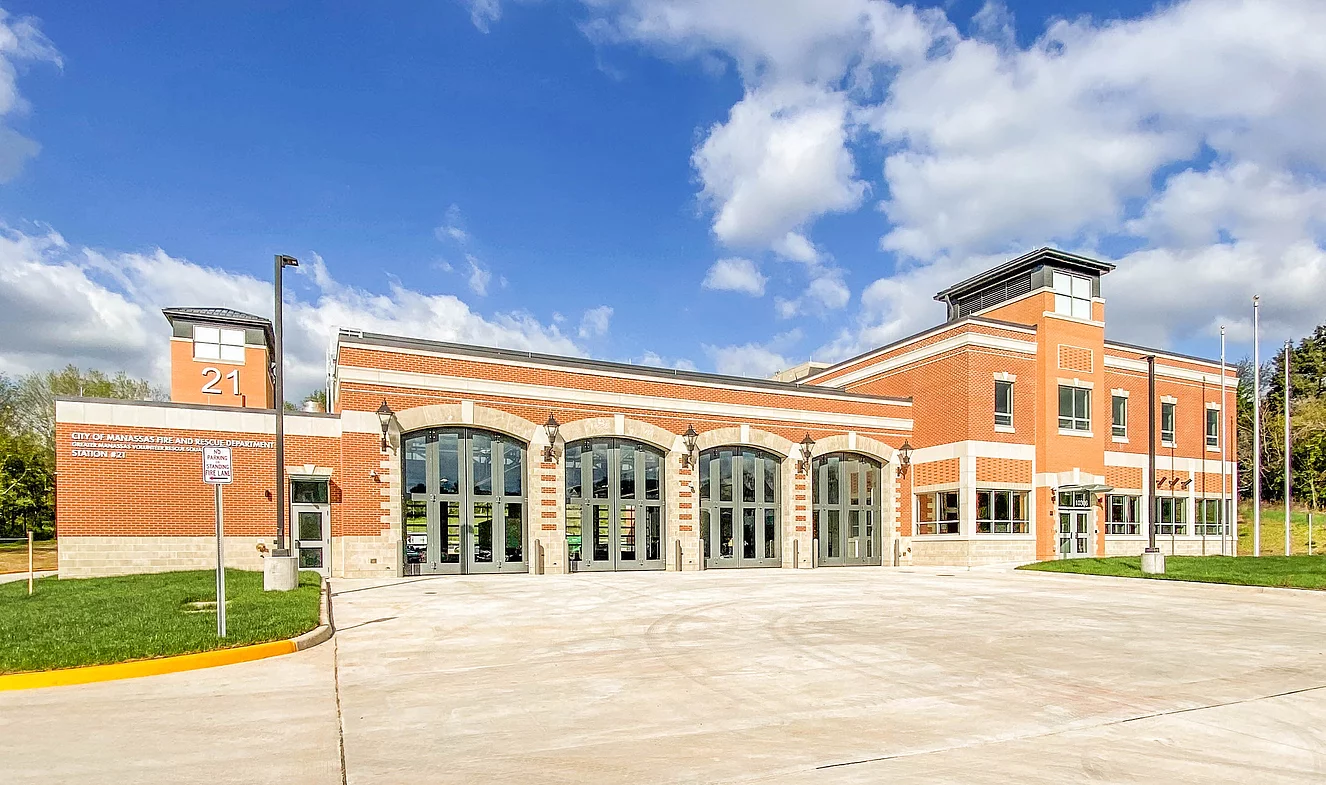
The completed Station #21: a civic facility designed for continuous operational readiness.
The Lesson for 24/7 Facilities
Emergency services, healthcare, logistics, and industrial buildings all face the same basic choice. When a space needs daylight but cannot tolerate glare or uneven light, the answer is not to turn the building into a dark box or rely on unfiltered glass. It is to make daylight a controlled performance input.
See the Station in Operation
This project video provides another view of Station #21 and the high-performance environment created for the people who serve the City of Manassas.