


A 100-Metre Turf Field Where Daylight Does Not Get in the Way
The University of Waterloo needed daylight for a 100-by-50-metre indoor turf field—but not the glare, uneven brightness, and player distraction that vision glass would bring to a field this large.
Project Details
|
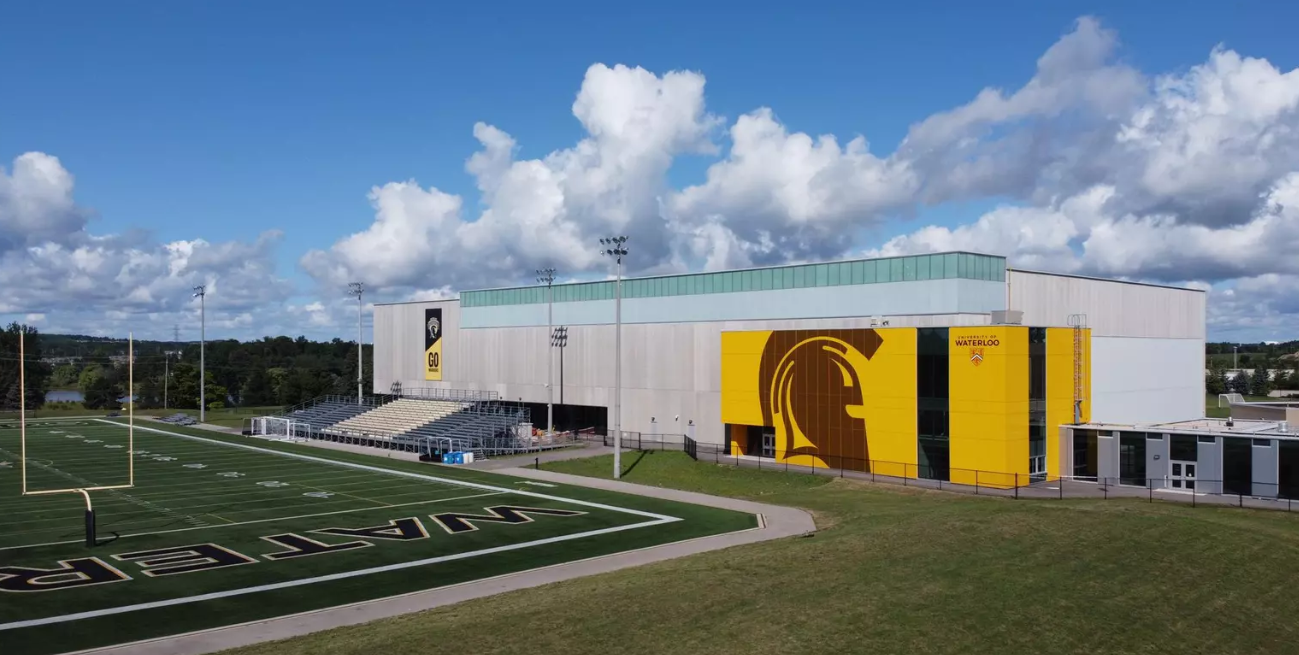
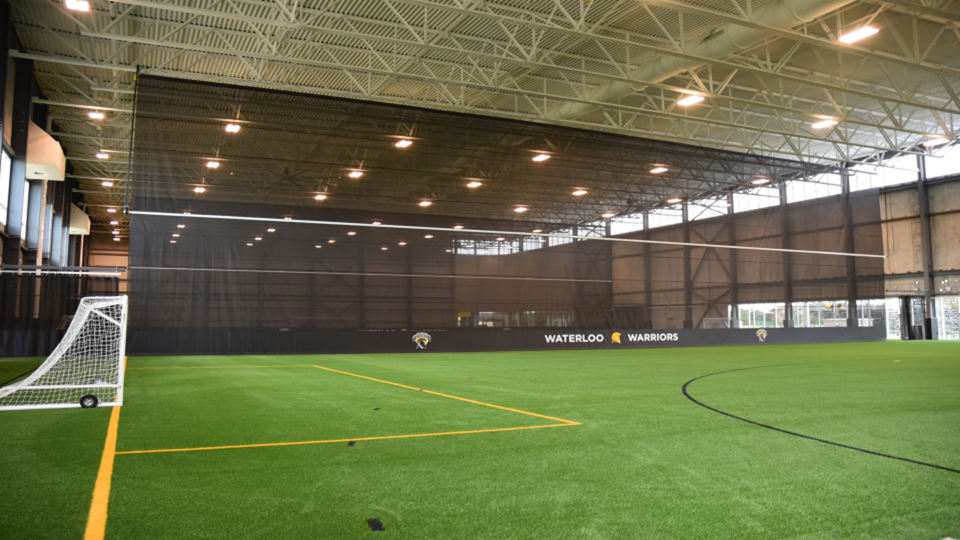 The University of Waterloo CIF Field House: a 100-metre indoor turf field designed for consistent daylight and uninterrupted play. |
The Challenge: A Field Too Large for Conventional Glass
The University wanted a field house that would be a high-performing athletic facility and a shared campus destination. It also had to integrate with existing buildings and the university’s future master plan through its material palette, exterior colours, turf, and field dividers.
Daylight Was Needed—But Direct Sun Was Not
On a 100-metre turf field, vision glass could meet an opening requirement while still creating the wrong playing environment: uneven daylight, glare, heat, and visual distraction for athletes. The design team needed light that could reach the field evenly, while the placement of the daylighting had to be deliberate enough to protect the usability of the space throughout the day.
That left the team with a different choice. Rather than treating daylight as an all-or-nothing façade decision, WalterFedy could use Solera® as the third option between opaque cladding and vision glass—bringing in broad, controlled daylight where the sports surface needed it.
The Solution: Daylight From the Right Direction
WalterFedy specified Solera® engineered daylight diffusers in the southeast elevation, where daylight needed to be managed and distributed across the field. The northwest elevation did not receive the same daylight pressure, so the team did not use Solera® there. Samples and configurations were selected to connect with the surrounding campus architecture and the planned location of the daylighting units.
A Playing Surface With Useful Daylight
Solera® was selected because it could spread daylight evenly across a large sports environment without affecting players’ ability to use the field. The daylighting strategy supported the facility’s visual integration while protecting the actual purpose of the space: reliable, active play.
The Proof: Performance in Every Field Configuration
The field house can operate as one full playing field or be divided into three separate areas for concurrent activity. Ali Rawi visited after completion in both configurations. In each case, the daylight had to support players rather than compete with them.
Rawi also noted that the natural daylight integrated with the other colours in the space, including the dividing curtain with the University logo and the playing-field glass. That matters in a large athletic volume: daylight has to support the space’s visual order, not wash it out.
A Facility Built for More Than Sport
The field house gives students a place for recreation, wellness, sport, and community. It also carries a direct connection to the University of Waterloo: Solera® technology has roots in the University’s Engineering Solar Research Laboratory, where Advanced Glazings founder Dr. Douglas Milburn completed graduate work.
See the Field House in Use
The Lesson for Indoor Sports Facilities
For large indoor fields, daylight is useful only when it serves the game. Vision glass can provide a view, but it is the wrong tool for delivering broad, glare-controlled light across a turf field. Modelling the exposure, assigning the right material to the right elevation, and using a daylighting component designed for diffusion creates a field that is usable in every configuration.