


Understanding the physics of light diffusion, thermal transfer, and visual comfort is the first step to designing building envelopes that actually work for the people inside them.
The Three Failures of Standard Glazing
The standard approach: add vision glass for light and views, then add blinds when the glare becomes unbearable. The blinds stay closed. The building goes back to artificial lighting. The glass — which cost a fortune to install — is now a wall.
This isn’t a blind problem. It’s a glazing problem. And it’s a solvable one — but only if you understand the physics of how light actually behaves when it enters a building.
Better buildings start with better daylighting decisions. That means understanding glare, diffusion, thermal transfer, and how to use the right glazing in the right place. That’s what this page is for.
Absolute brightness can cause discomfort when levels are simply too high (like stepping outside on a bright, snowy day). The threshold varies by individual, but typically falls between 6,000 and 10,000 cd/m².
Contrast is the real culprit in building design. When there is a large difference between a bright source (a window) and the average brightness of the room (a computer screen or interior wall), the eye struggles to adapt. This extreme contrast is what we perceive as glare. A contrast ratio of 10:1 in the immediate field of view, and 20:1 in the periphery, is generally considered the maximum acceptable limit.
Standard vision glass has purely specular transmission — light passes straight through with no scattering, creating harsh contrast. Translucent glazing distributes the light onto adjacent walls and ceilings, raising the average ambient brightness of the space. This lowers the contrast ratio, allowing the room to feel bright and open without causing glare discomfort.
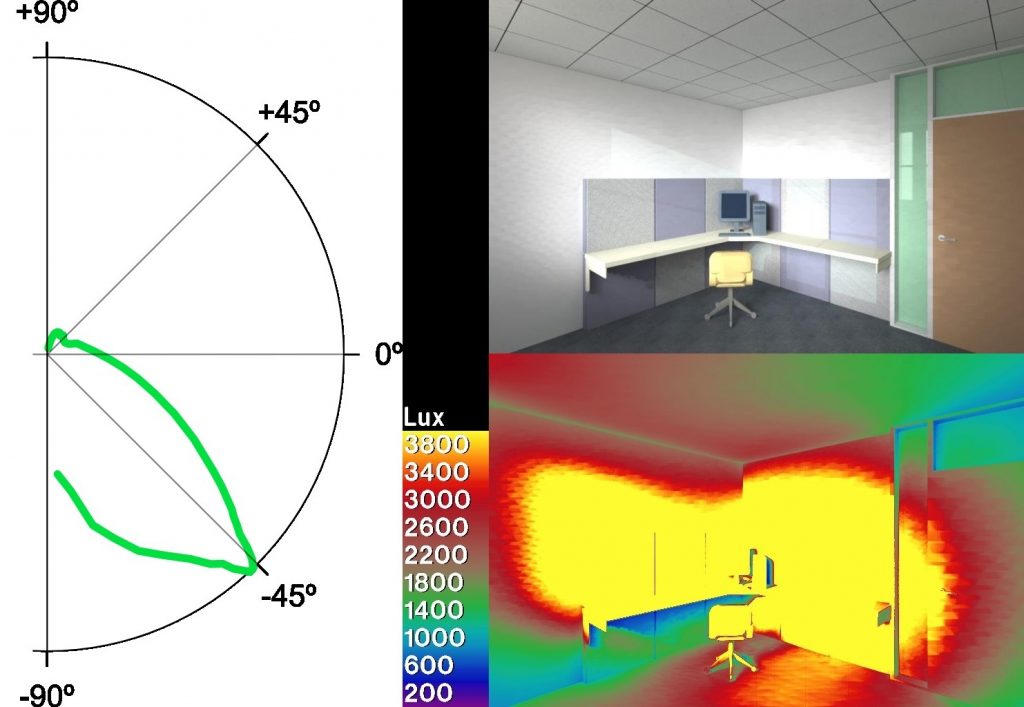
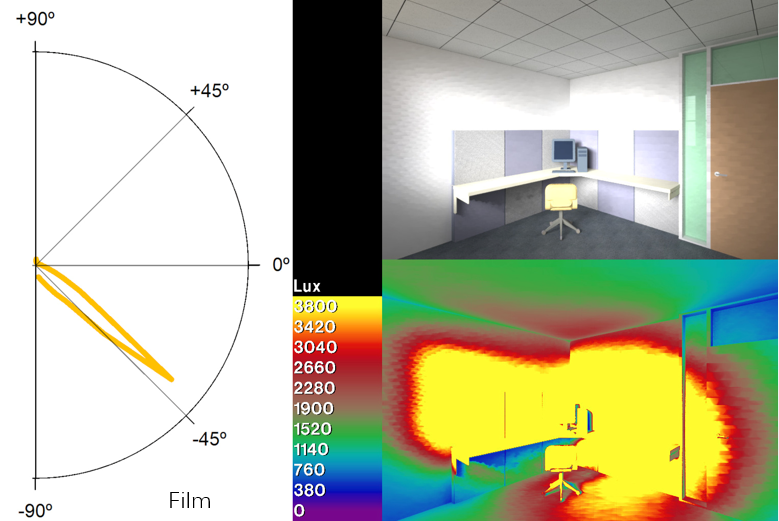
Materials like acid-etched glass or white laminate PVB scatter light just enough to obscure the view, but the scattering is a relatively narrow angle. The brightness of these materials still varies greatly depending on your viewing angle and the position of the sun, often resulting in hot spots.
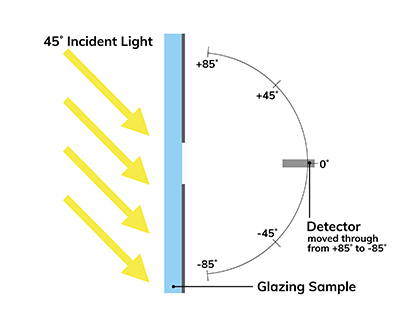
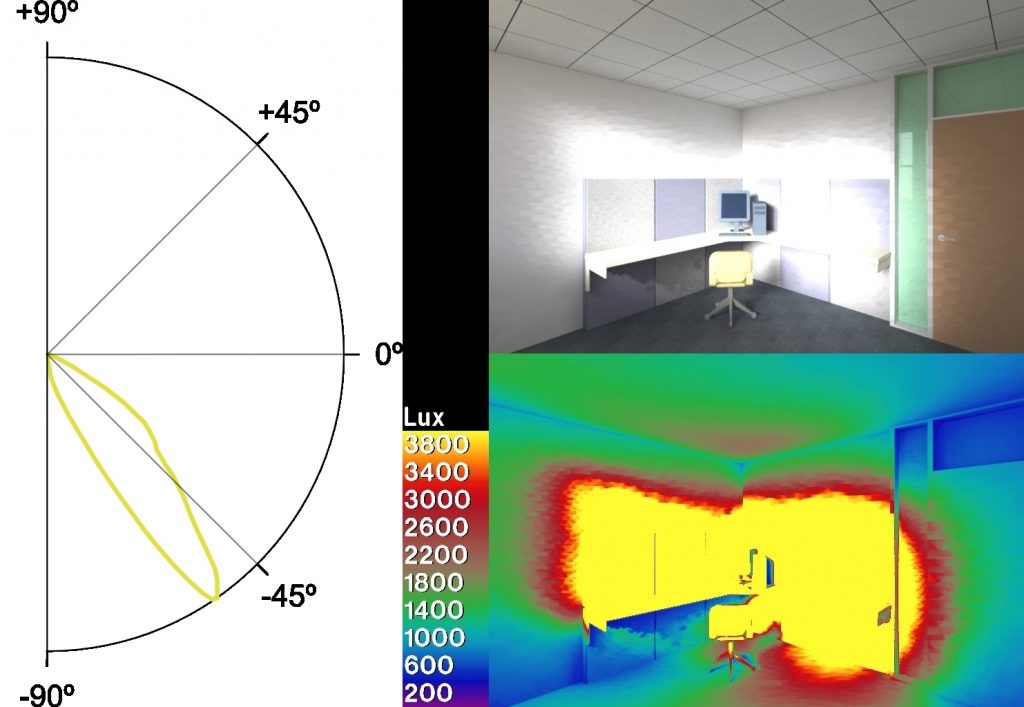
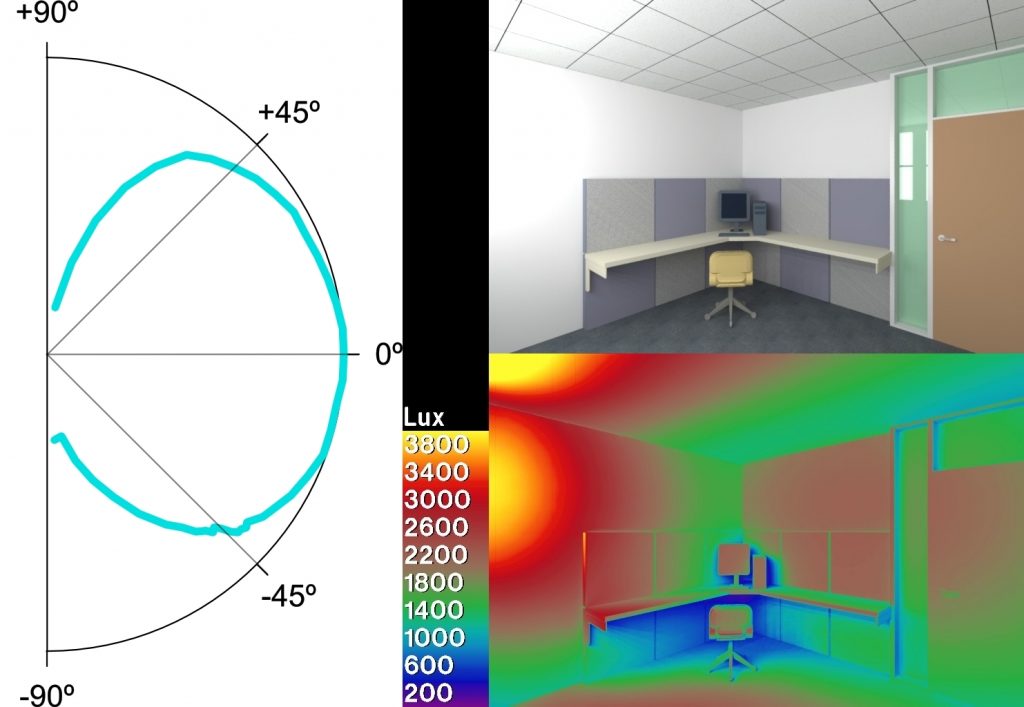
Light Diffusing Power™ (LDP™) is a proprietary metric developed by Advanced Glazings to compare the effectiveness of translucent materials. A material that transmits light equally in all directions (a perfect diffuser) has an LDP™ of 1.0. A material with no upward redirection has an LDP™ of 0.0.
Solera® uses a proprietary diffusing veil that achieves excellent wide-angle scattering. Regardless of the sun’s angle, a Solera® unit appears equally bright from every direction, completely eliminating hot spots.
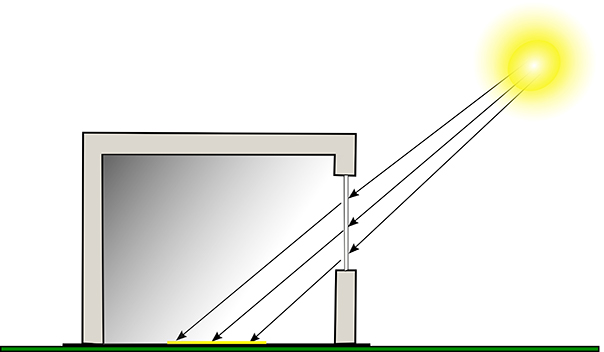
Standard Vision Glass — Specular Transmission
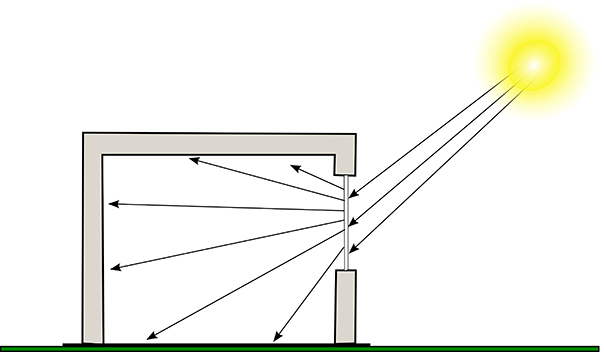
Solera® — Volumetric Diffusion
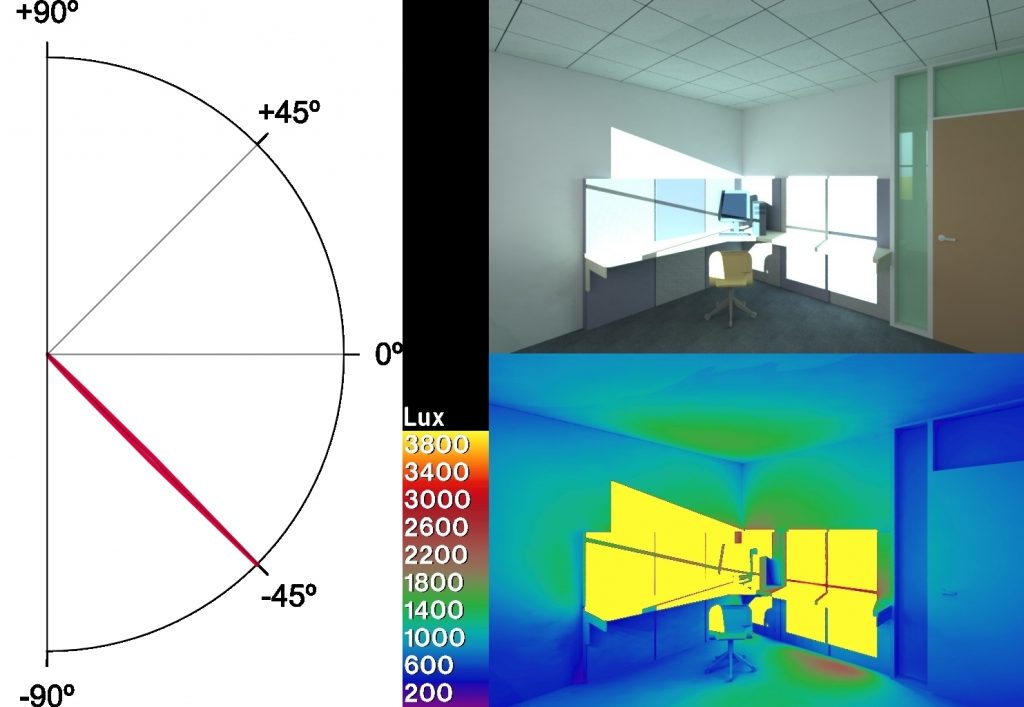
LDP™ in action — how each material’s score translates to how the space actually looks and feels:
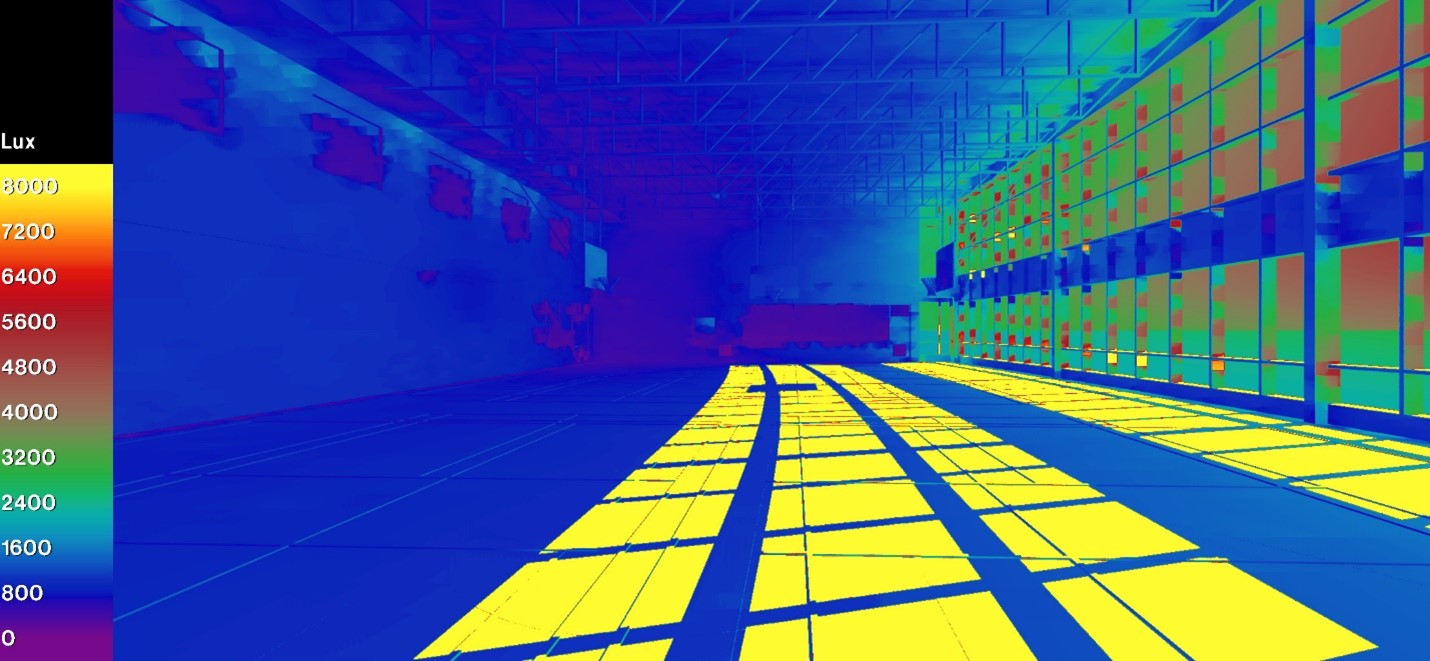
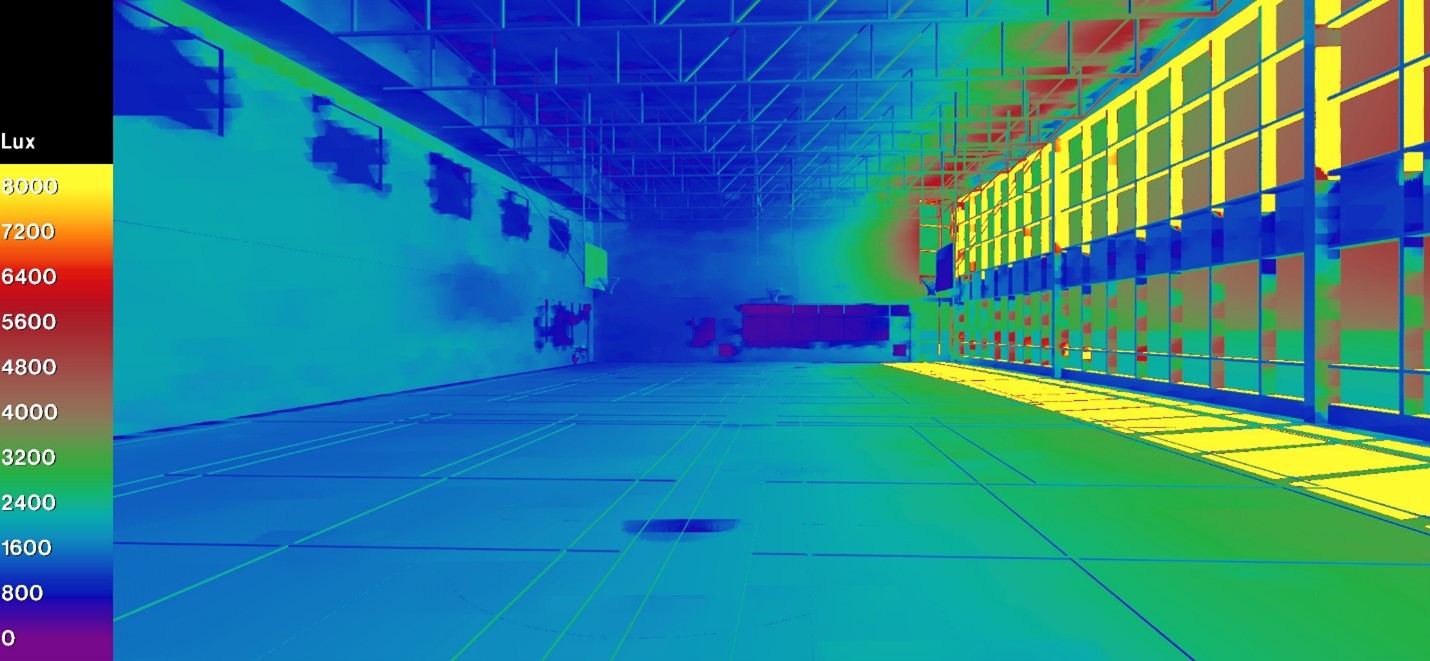
These false-colour Radiance simulations show the measured distribution of light entering a space at 45° through five different glazing types. The brighter the ceiling and walls, the higher the LDP™ score — and the more usable the daylight is for the people inside.
Visible light is energy that is absorbed as heat. Therefore, Visible Light Transmittance (VLT) and Solar Heat Gain Coefficient (SHGC) are inextricably linked — for any visible light transmittance, there will be some solar heat gain.
Traditional approaches use tinted glass or solar control Low-E coatings to reflect or absorb infrared light. While this reduces SHGC, it also reduces VLT, negatively impacts colour rendering (CRI), and fails to solve the glare problem. You end up with a dark, artificially-coloured space that still requires blinds.
Because Solera® diffuses light volumetrically, the solar infrared energy is also diffused and evenly distributed. Occupants do not experience the intense thermal hot spots associated with direct beam sunlight.
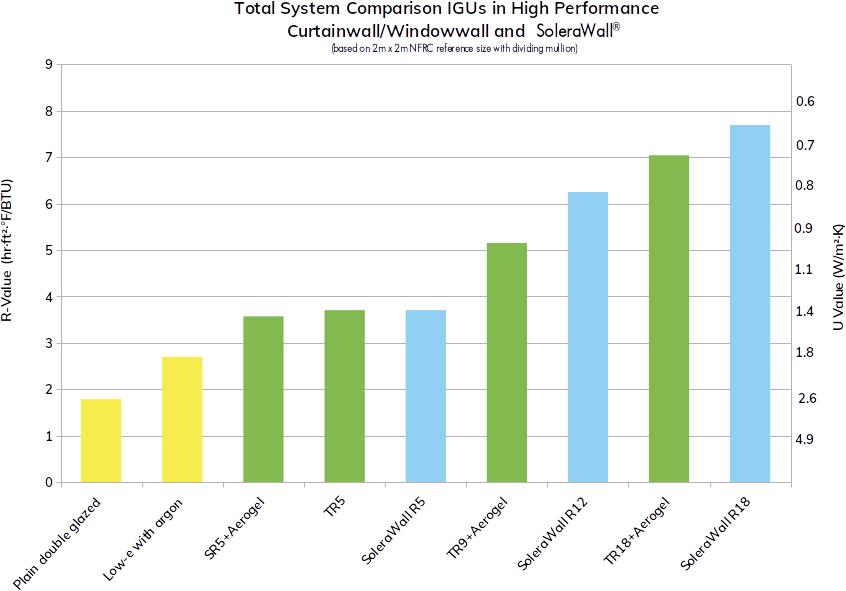
Heat transfers through glazing via convection (air movement) and thermal radiation.
Honeycomb Core: Solera® uses a transparent honeycomb insulation material called InsolCore™. The cells are small enough to create dead air spaces, stopping convection. The cell walls also absorb thermal infrared radiation, suppressing radiation transfer.
Aerogel Integration: For maximum performance, the honeycomb cells are filled with aerogel — a solid consisting of >90% air contained in a nanoporous structure. This severely inhibits conductive heat transfer, allowing Solera® to achieve unprecedented insulation values up to R-25.
The insulating properties of a complete envelope must account for the centre-of-glass, the edge-of-glass, and the framing. Solera® components dramatically improve the overall U-value of curtain wall systems, while the frameless SoleraWall® system eliminates framing thermal bridges entirely, approaching the performance of insulated metal panels.
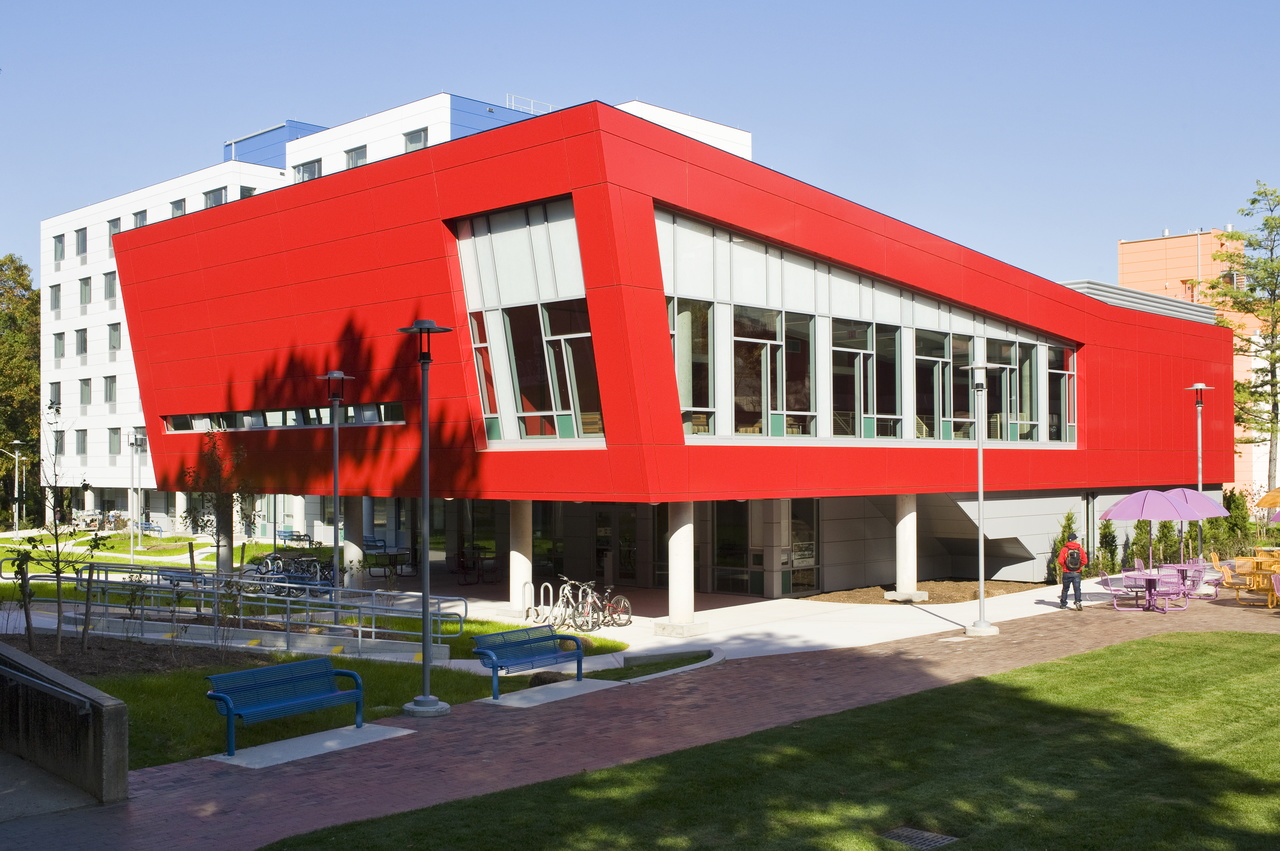
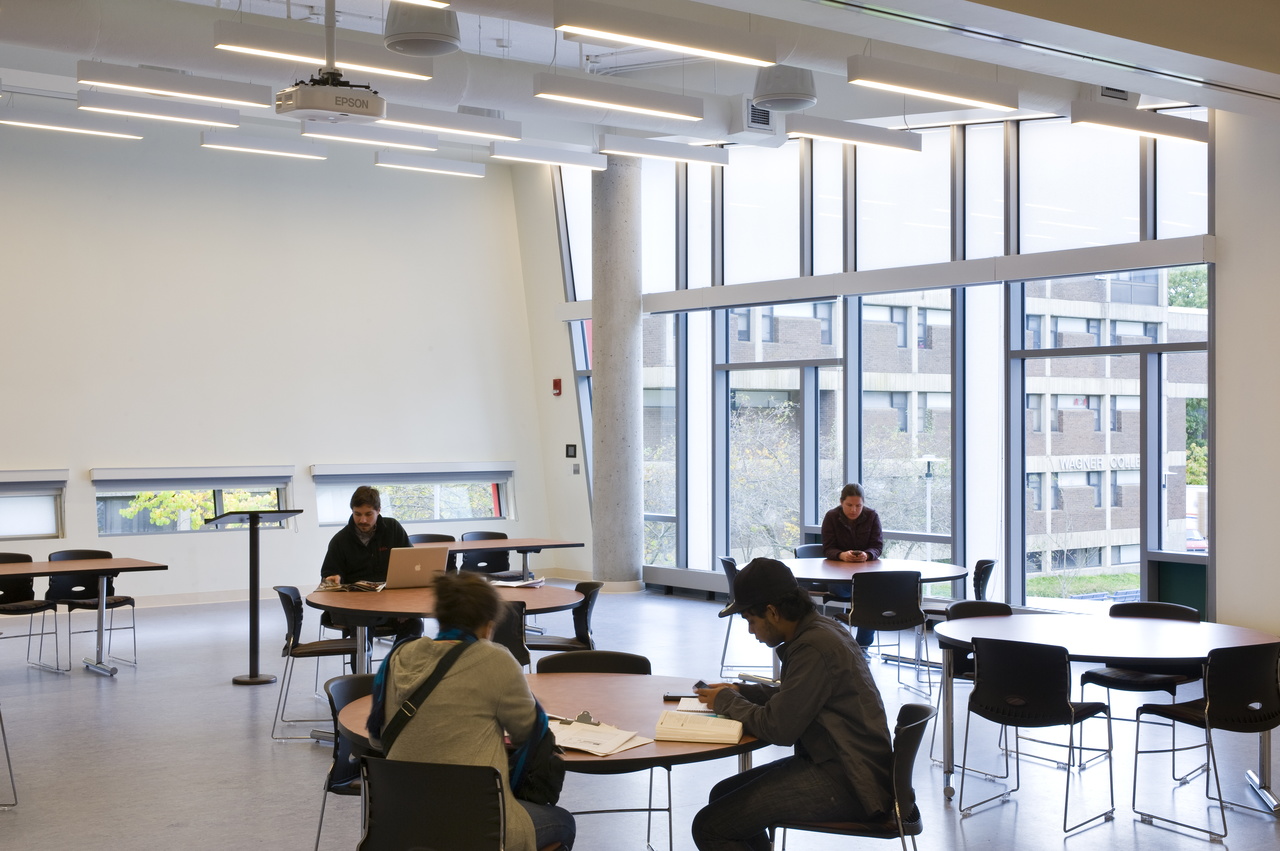
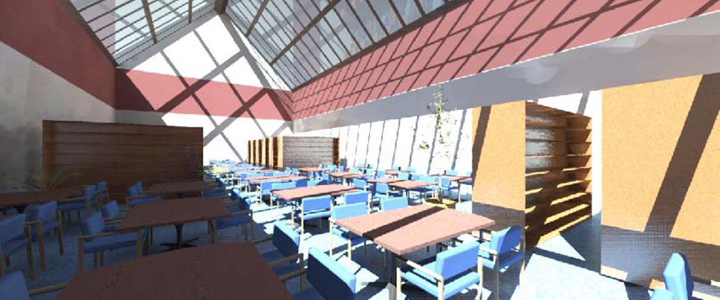
Library — Standard Vision Glass
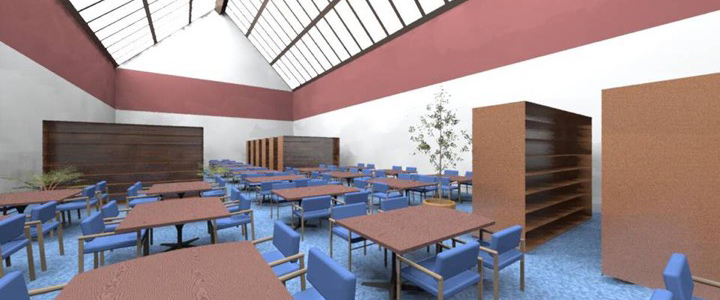
Library — With Solera®
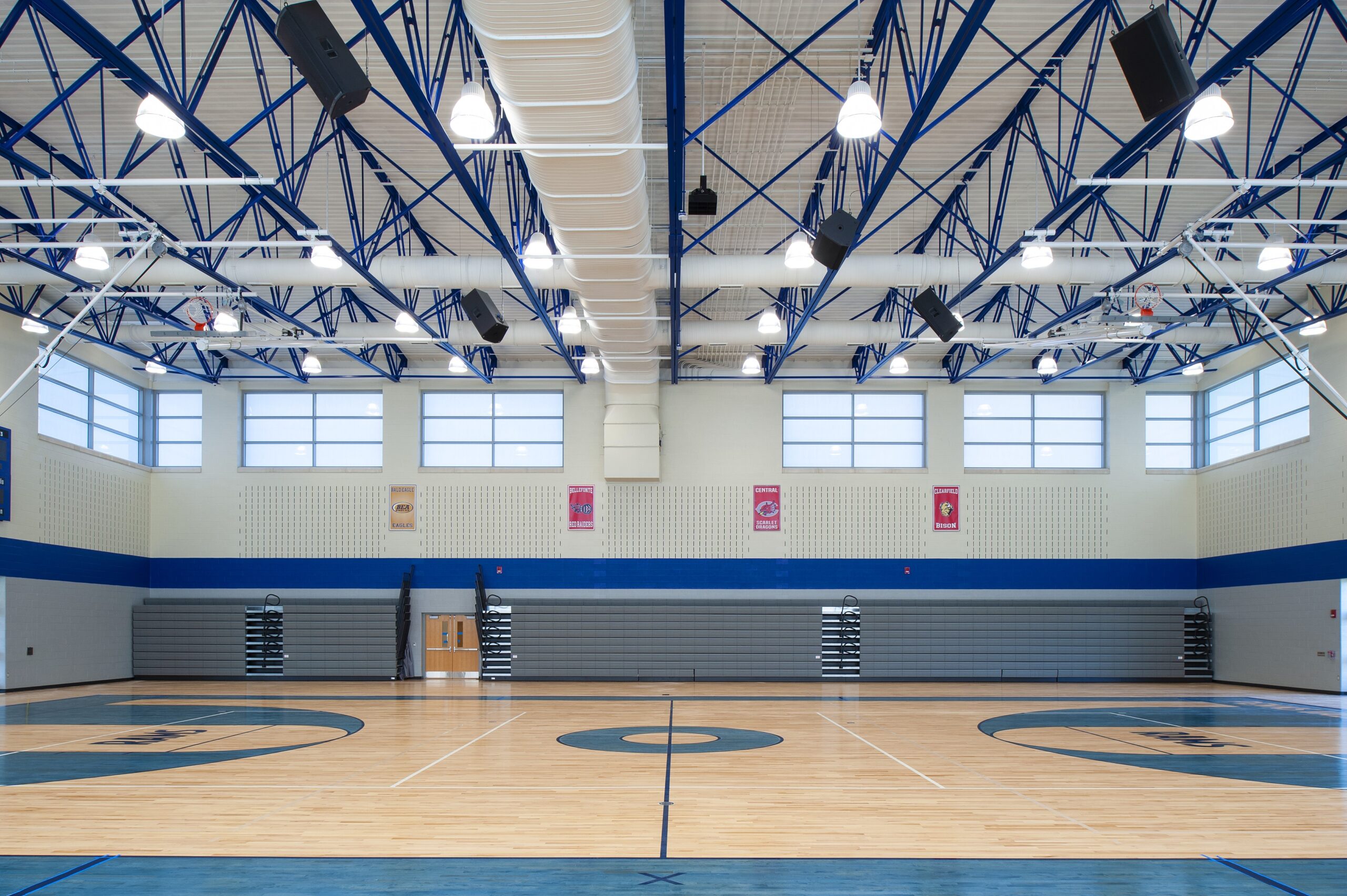
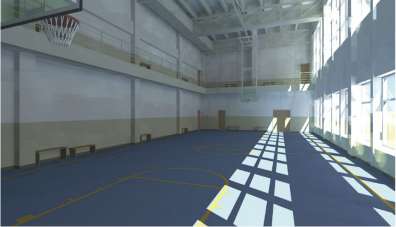
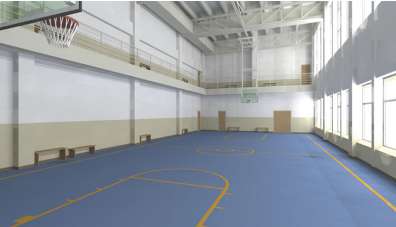
Gymnasium — Standard Vision Glass
Gymnasium — With Solera®
Gymnasium — All Vision Glass (False-Colour)
Gymnasium — Solera® in Clerestory (False-Colour)
We model your specific project using your drawings and orientation. You see the light levels, the glare risk, and the right configuration before you commit to anything.
We also have a library of pre-modelled space types — if your project is similar to one we’ve already run, we can turn it around even faster.
Place vision glass at eye level where occupants need a direct connection to the outdoors. This is the glass that frames the view — and SoleraWall® is also available in Vision glass for large-expanse facades.
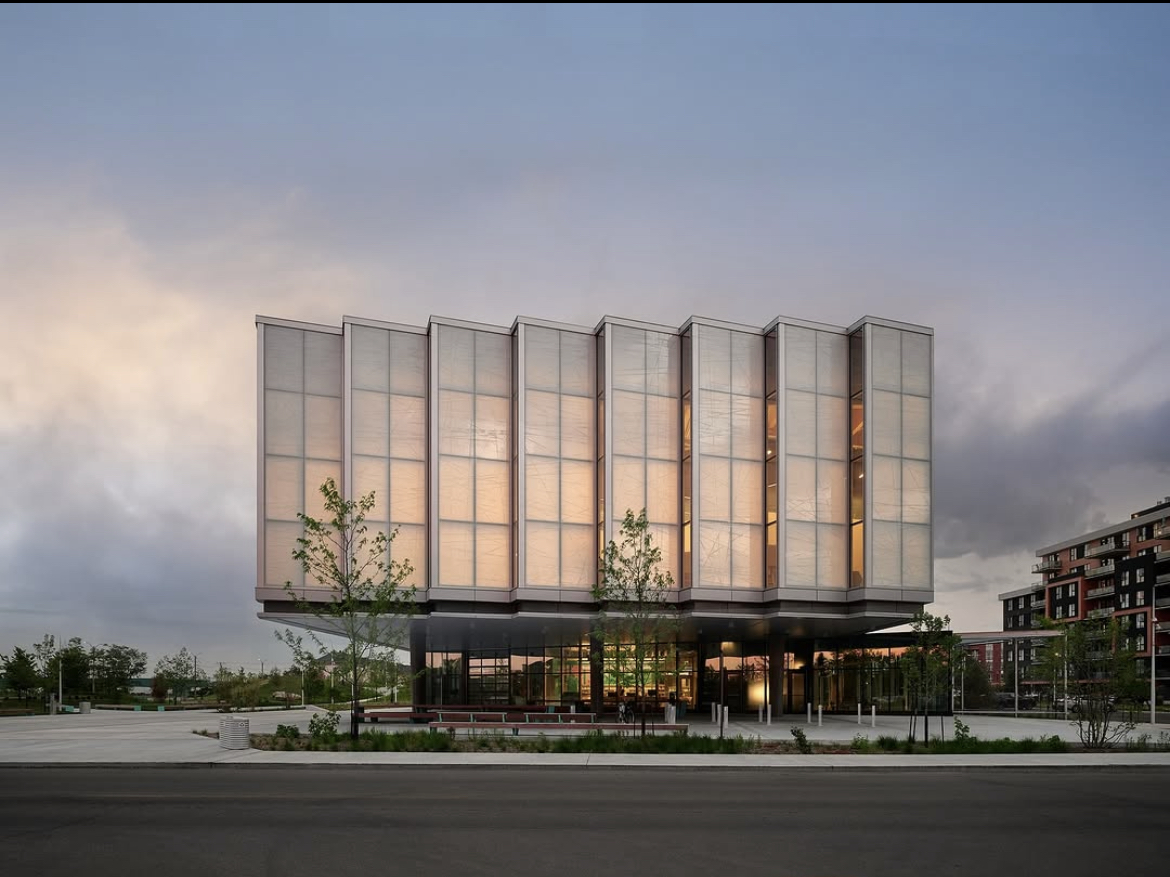
Use Solera® above the vision zone, in clerestories, skylights, and side-lites to flood the space with soft, glare-free daylight — and create that iconic warm glow after dark. For entire walls or building envelopes, use SoleraWall®.
Everywhere else — where daylight and views aren’t the priority — use opaque cladding or insulated metal panels. Every material doing exactly the job it was designed for.
Conventional plastic-based translucent glazings (polycarbonate, FRP) have practical lifespans of 10–20 years, limited by colour change, scratching, cracking, and fibre bloom. Solera® achieves a usable lifespan of 60–100 years.
Glass holds its appearance indefinitely and protects all underlying components from UV exposure. The acrylic honeycomb core is inherently UV-stable and shielded by glass. The anodized aluminum spacer system is protected by the framing. And unlike standard IGUs, Solera® uses equilibrium moisture dynamics — it will not accumulate internal moisture or fail due to seal degradation.
Lifespan Comparison
Polycarbonate / FRP
10–20 years
Solera®
60–100 years
Our technical team can model your space, provide optical data files, and help you choose the right configuration for your project — at no cost.
TALK TO A CONSULTANT › VIEW CASE STUDIES › VIEW PRODUCT DATA ›Want to go deeper on daylighting and earn AIA learning units at the same time? We offer accredited courses available as a Lunch & Learn at your firm.
SEE OUR COURSES ›
Explore the harms of LEDs, daylighting in schools, and much more on our podcast — Better Buildings for Humans (BBFH). Powered by Advanced Glazings.
LISTEN NOW