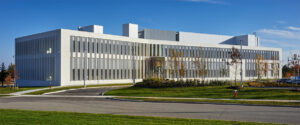



The Arena That Turned the Lights Off
A hockey arena was expected to be a dark, artificial-light box. Port Hawkesbury asked a better question: could a community arena deliver useful daylight without glare on the ice, unwanted heat, or higher operating costs? The answer reshaped what the town believed an arena could be.
Project Details
|
 |
A Civic Landmark Built Around a Better Question
In 2004, Port Hawkesbury needed a facility that could match a growing town’s ambitions. New industry and population growth had outpaced the community’s existing administrative and recreational spaces, so council commissioned Ojolick Associates to create a civic centre that could host hockey tournaments, trade shows, community events, and the everyday life of the region.
The arena was the centrepiece. But rather than accept the conventional dark-box approach, Robert Ojolick saw an opportunity to challenge the way indoor sports facilities were designed. The project needed to give athletes and visitors a connection to daylight, while preserving the ice surface, controlling glare, and protecting the municipality from the cost of running lights all day.
The Arena Daylighting Problem
Conventional vision glass introduces direct sun, strong shadows, and glare — all of which can interfere with play on an ice surface. Solar heat also puts pressure on HVAC systems and makes an already energy-intensive arena harder to operate. As a result, many indoor rinks, gymnasia, and stadiums simply close themselves off from the outdoors and depend on artificial light even at midday.
What Port Hawkesbury Needed to Solve
Model the Alternative Before You Build
Ojolick asked AGL to model the project before committing to the glazing decision. Using the project drawings, the team ran a Radiance® simulation first with vision glass, then with Solera®. The difference was clear: vision glass produced the familiar glare and shadow patterns; Solera® distributed daylight more evenly through the arena across the day.
Solera® as a Daylighting Component
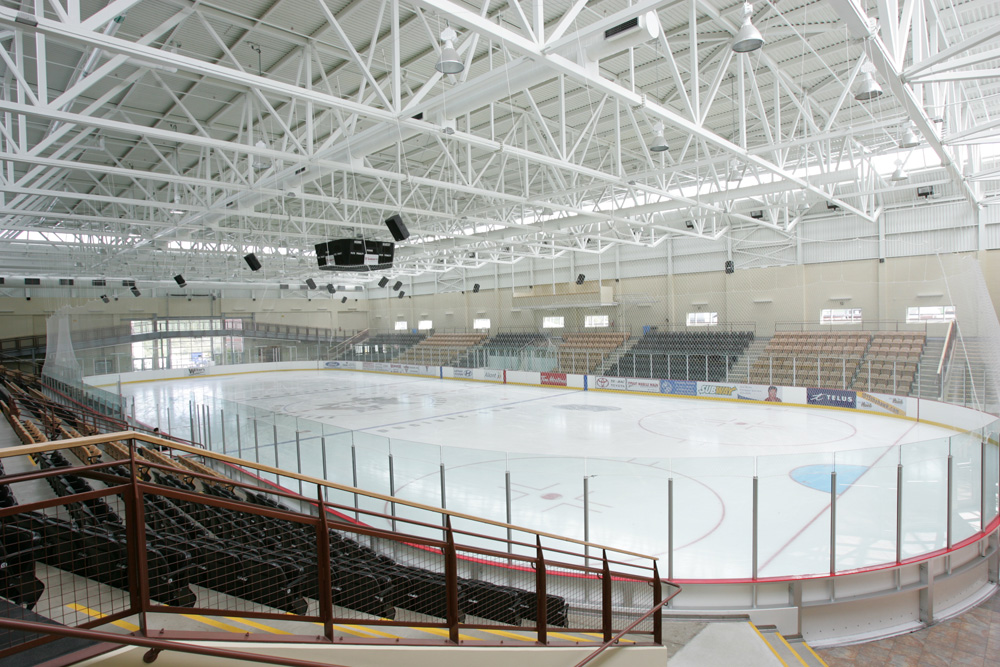
The clerestory used standard curtainwall with Solera® T glazing designed to fit into the system. Solera’s proprietary diffusion veil turns direct sun into broad, usable daylight, while the insulated glazing supports the thermal performance an ice arena needs. Vision glass would have created views and raw sun; Solera® created a reliable daylight environment for play, work, and events.
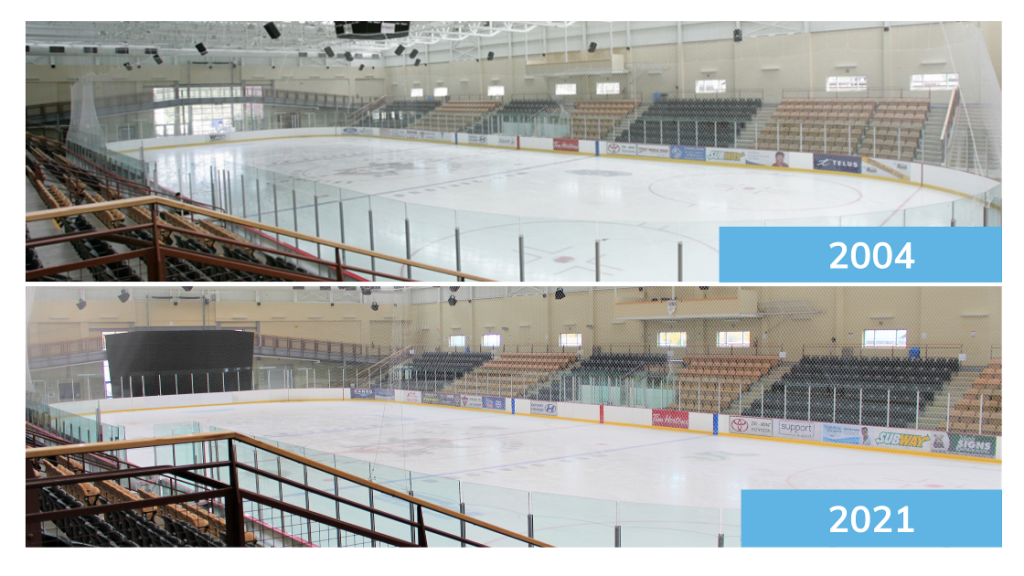
More than two decades after opening, the project’s Solera® daylighting remains central to the arena experience.
A Daylit Arena That Keeps Working
The benefit was visible before the building even opened. Once the envelope was complete, interior crews were able to finish the arena under natural daylight conditions, using artificial light only after sunset. For the operators, the long-term result was just as meaningful: the source material reports that overhead lights can remain off for much of the day, creating substantial savings on the power bill.
More Than Hockey: A Community Venue With Range
Daylight helped make the Civic Centre a venue people wanted to use beyond the hockey schedule. The project source identifies a range of sporting and cultural events hosted at the arena, demonstrating how a high-quality indoor environment can support both regional visibility and day-to-day community value.
NHL Training CampThe Florida Panthers selected Port Hawkesbury for a training camp, bringing elite sport to a daylight-filled arena. |
Grand Slam of CurlingThe Civic Centre has hosted national curling competition in a setting designed for visual comfort and versatility. |
World HockeyInternational youth hockey competition brought world-class play to the community venue. |
Celtic ColoursThe facility has also been used for the annual Celtic Colours International Festival, extending its value beyond sport. |
Port Hawkesbury’s impact reached far beyond Cape Breton. In BusinessWeek Online’s Wonders of the Sporting World list, the arena ranked No. 6 alongside Munich’s Allianz Arena, Beijing’s Bird’s Nest, and London’s Wembley Stadium — remarkable recognition for a community facility whose defining innovation was a daylighting strategy built around the activity inside.
Watch the story behind one of BusinessWeek Online’s top 10 sports stadiums, then open the original article for the full ranking.
Durability Is Part of the Performance
Arena glazing must work for the life of the facility, not just look good on opening day. The project source reports that after more than two decades of Nova Scotian winters and sunlight, the Solera® units continue to perform without yellowing, degradation, or a loss of daylighting performance. That matters because the long-term value of daylighting comes from reducing operating demand year after year, not simply from the first impression.
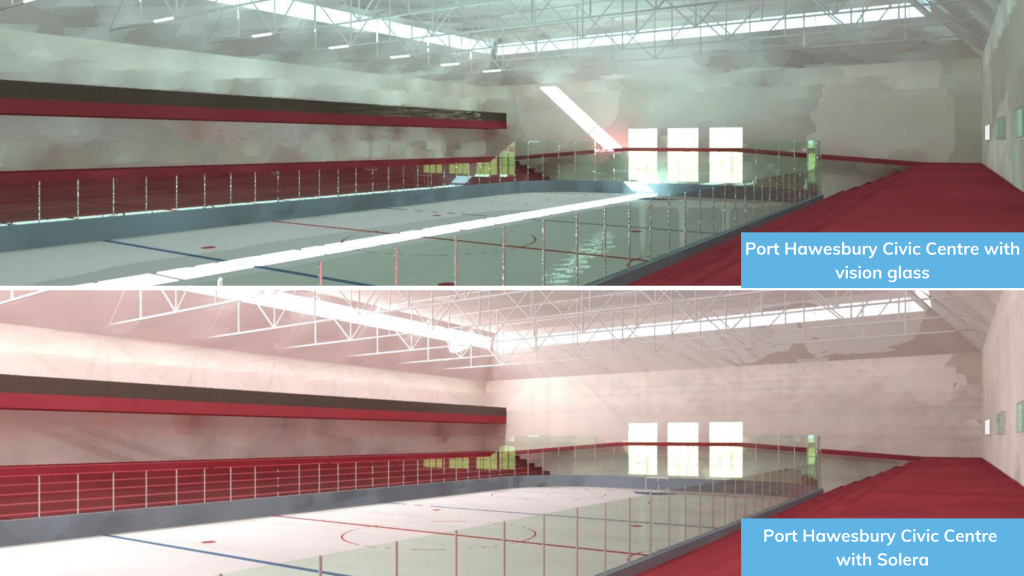
The design uses vision glass where views are useful and Solera® above for diffuse daylight at arena scale.
The Result: A Community Landmark That Changed the Arena Model
Port Hawkesbury Civic Centre demonstrates the alternative to the conventional arena: not a dark box with expensive lights running all day, and not an overglazed space burdened by glare and solar heat. It is a building that uses the right kind of glazing in the right place to make daylight work for athletes, staff, visitors, and the town that owns it.
For community centres, arenas, field houses, and other large indoor spaces, the lesson is straightforward. Start with the activity inside, model the light before construction, and create an envelope where views, diffuse daylight, and opaque materials each do the job they are designed to do.
Architect: Ojolick Associates | Client: Town of Port Hawkesbury | Product: Solera® T | Application: Arena clerestory in curtainwall